Introduction
Choosing the right trolling motor isn’t just about picking the biggest or most expensive option — especially in South Africa, where fishing conditions vary dramatically between dams, rivers, and estuaries. Wind, current, boat size, and load all play a role, and choosing incorrectly can leave you frustrated on the water or replacing gear sooner than expected.
This guide is designed to help South African anglers make informed decisions when selecting a trolling motor, based on real-world conditions and practical experience. Whether you fish calm inland dams, flowing rivers, or tidal estuaries, this article will walk you through what truly matters.
Understanding South African Fishing Waters
Dams and Still Water
Most inland dams in South Africa are relatively calm but can become windy very quickly. Larger dams like Hartbeespoort, Vaal, and Midmar demand more thrust due to open water exposure, while smaller farm dams allow for lighter setups.
Key considerations:
- Wind resistance
- Boat control over long distances
- Battery endurance
Rivers
River fishing introduces current into the equation. Even a moderate flow can place continuous strain on a trolling motor, especially when manoeuvring upstream or holding position near structure.
Key considerations:
- Constant resistance from current
- Steering control
- Battery drain under sustained load
Estuaries
Estuaries are the most demanding environment. Changing tides, wind, and brackish water conditions mean your trolling motor must work harder and resist corrosion.
Key considerations:
- Stronger thrust requirements
- Salt and brackish water exposure
- Precise boat positioning
Trolling Motor Thrust Explained (34lb, 44lb & 54lb)
Many anglers underestimate how much thrust they actually need. As a rule, more thrust equals better control, not just more speed.
34lb Thrust
Best suited for:
- Small boats (under 3.5m)
- Light loads
- Calm dams and protected waters
Limitations:
- Struggles in wind
- Not ideal for rivers or estuaries
44lb Thrust
Best suited for:
- Medium boats (3.5m–4.5m)
- Moderate gear loads
- Larger dams and light river use
This is the most versatile option for many South African anglers.
54lb Thrust
Best suited for:
- Larger boats
- Heavy gear and multiple anglers
- Rivers, estuaries, and windy dams
If you frequently fish challenging conditions, this level of thrust provides confidence and control.
👉 For a detailed comparison, see our guide on choosing between 34lb, 44lb, and 54lb trolling motors.
Boat Size, Weight & Load (Often Overlooked)
Boat length alone isn’t enough — total load matters more:
- Hull weight
- Fuel
- Batteries
- Passengers
- Gear
An overloaded boat paired with an underpowered trolling motor will drain batteries quickly and struggle in poor conditions. When in doubt, size up.
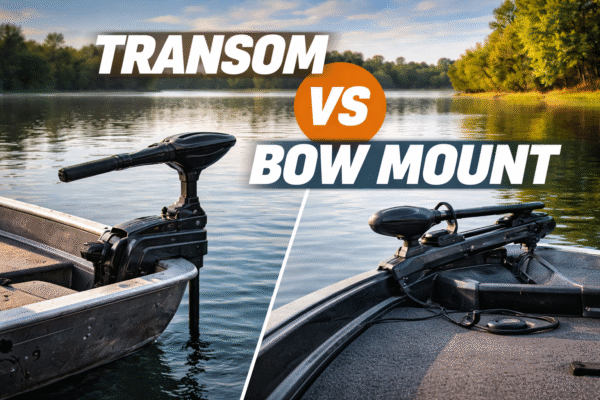
Transom Mount vs Bow Mount in SA Conditions
Transom Mount
- Easier to install
- More affordable
- Ideal for small boats and casual anglers
Works well on dams and slow rivers.
Bow Mount
- Superior boat control
- Better in wind and current
- Preferred for estuary and river fishing
👉 We break this down fully in our Transom vs Bow Mount Trolling Motors guide.
Battery Considerations (Reality on the Water)
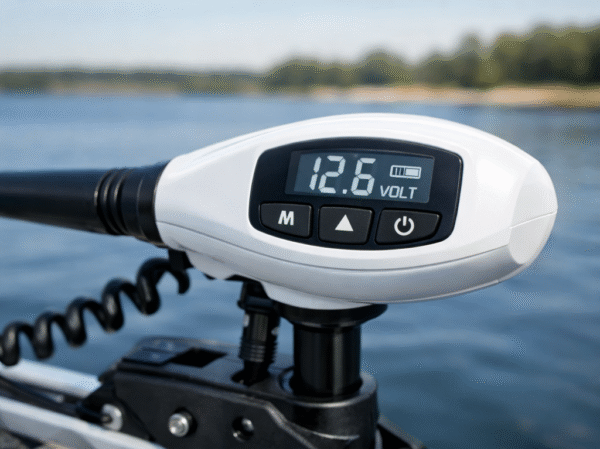
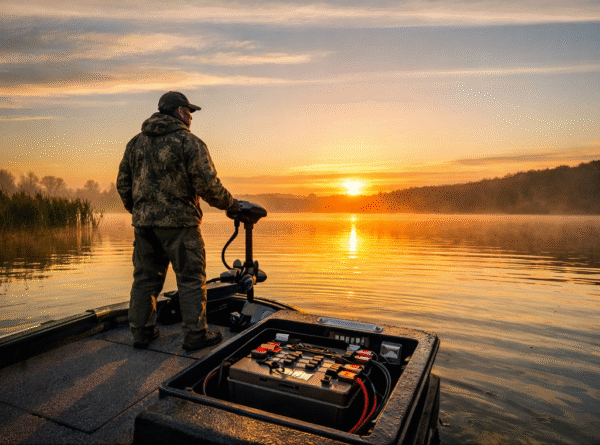
Most trolling motors operate on 12V systems, but battery quality is critical.
Common mistakes:
- Using standard car batteries
- Undersizing battery capacity
- Ignoring recharge time
Deep-cycle batteries are essential for consistent performance and longevity.
Common Mistakes Anglers Make
- Choosing thrust based on price, not conditions
- Ignoring wind and current
- Overloading boats
- Using poor-quality batteries
Avoiding these mistakes saves money and improves your fishing experience.
Quick Decision Guide
| Fishing Environment | Recommended Thrust |
|---|---|
| Small dams | 34lb |
| Large dams | 44lb |
| Rivers | 44lb – 54lb |
| Estuaries | 54lb |
Final Thoughts
The right trolling motor transforms how you fish. By matching thrust, mounting style, and battery setup to South African conditions, you’ll enjoy better control, longer fishing sessions, and fewer equipment issues.
Explore our other fishing and outdoor guides for deeper insights into gear, setup, and performance.